*The NCCN Guidelines for NSCLC provide recommendations for individual biomarkers that should be tested and recommend testing techniques but do not endorse any specific commercially available biomarker assays or commercial laboratories.4
†It is recommended at this time that, when feasible, testing be performed via a broad, panel-based approach.4
‡Does not include locally advanced.4
§Testing for HER2 via IHC is recommended at some point during progression. Timing should be balanced with tissue conservation.4
**This study used the Flatiron EHR-derived deidentified database to evaluate a total of 10,333 patients with an advanced/metastatic non-squamous NSCLC diagnosis on or after January 1, 2017. 7,627 patients were White (n=6,705) or of Black/African American (n=922) descent. The study included patients who received treatment within 120 days, and excluded patients with additional cancers and those who died within 120 days of diagnosis. Biomarker testing included ALK, EGFR, ROS1, KRAS, and BRAF and included all single-gene and NGS-based tests, and was evaluated within 10 days of advanced/metastatic diagnosis.6
††Race and ethnicity were patient self-reported variables.
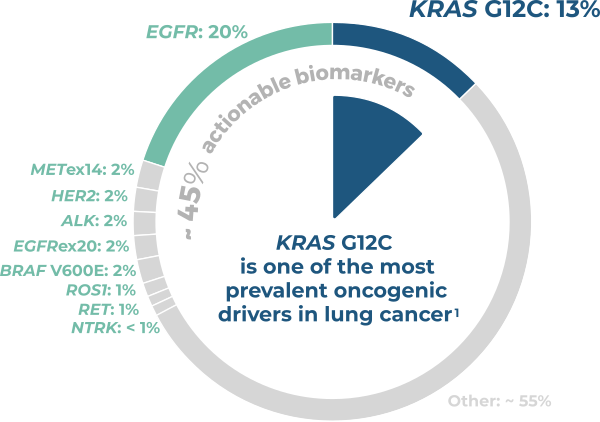
ALK, anaplastic lymphoma kinase; BRAF, v-Raf murine sarcoma viral oncogene homolog B; EGFR, epidermal growth factor receptor; EHR, electronic health record; HER2, human epidermal growth factor receptor 2; IHC, immunohistochemistry; KRAS, Kirsten rat sarcoma viral oncogene homolog; MET, mesenchymal epithelial transition; NCCN, National Comprehensive Cancer Network; NRG1, neuregulin 1; NSCLC, non-small cell lung cancer; NTRK, neurotrophic-tropomyosin receptor kinase; RET, rearranged during transfection; ROS1, rearrangement of the receptor tyrosine kinase 1.